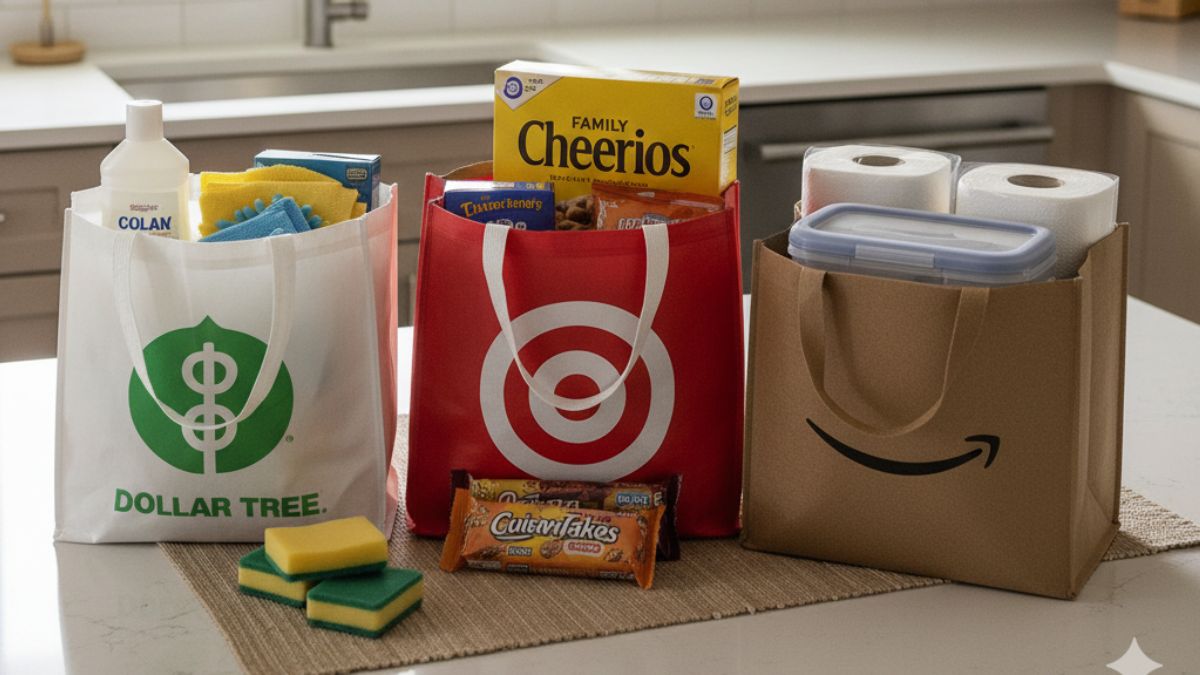
The Best Discount Stores for Everyday Essentials (Dollar Tree vs. Target vs. Amazon Basics)
When it comes to stocking up on everyday essentials—cleaning supplies, snacks, household basics, and family must-haves—most of us have a favorite go-to store. But is it really the best deal? Dollar Tree, Target, and Amazon Basics each promise value, yet the savings depend on what you buy, how often, and how you shop. For families on tight budgets, understanding where each retailer shines can stretch your money further every month.
TL;DR
- Dollar Tree: Best for small quantities, party supplies, and brand-name surprises.
- Target: Strongest for quality store-brand items and frequent household promotions.
- Amazon Basics: Best for bulk household staples delivered on a schedule with subscription discounts.
- Mix and match: Buy cleaning supplies from Amazon, snacks from Dollar Tree, and kids’ essentials from Target to get the best value overall.
Why Compare Discount Stores?
Rising prices on household goods have forced many families to rethink their shopping habits. It’s not just about who’s cheapest—it’s about reliability, quality, and convenience. A low price means little if you’re constantly replacing items or making extra trips. That’s why smart shoppers compare by price per unit, shelf life, and overall usefulness for busy homes.

How We Compared Prices
This comparison looked at ten common household essentials: paper towels, dish soap, toilet paper, trash bags, snacks, canned vegetables, pasta, hand soap, batteries, and storage containers. Prices were averaged from online listings and in-store checks in fall 2025.
1. Dollar Tree: Small Quantities, Big Surprises
Dollar Tree is unbeatable for single-use or small household quantities. You can grab brand-name finds for $1.25 each, but shoppers should compare sizes carefully. The store’s strength lies in cleaning products, snacks, and seasonal items.
- Best buys: Dish soap, bleach, snack-size chips, party goods, greeting cards.
- Skip: Paper towels and toilet paper—fewer sheets per roll make them more expensive per use.
- Pro tip: Check expiration dates on food and buy storage bins during back-to-school season for the best designs and availability.
2. Target: Reliable Quality and Weekly Savings
Target’s Up & Up brand offers high-quality essentials often priced 10 to 20 percent below national brands. Families who combine the Target Circle app with store promotions can regularly save more than at Dollar Tree or Amazon on non-bulk items. Target also runs frequent “buy 3, get a $5 gift card” deals across cleaning and household categories.
- Best buys: Up & Up cleaning products, paper goods, kids’ essentials, toiletries.
- Skip: Single-use or bulk food items—Target’s grocery section is smaller and higher priced.
- Pro tip: Use Target Circle to stack manufacturer coupons with in-app deals and weekly ads.
3. Amazon Basics: Bulk Savings, Delivered
For families managing larger households or limited time, Amazon Basics offers bulk essentials and steady pricing. Items like batteries, trash bags, and cleaning cloths are often cheaper per unit than store alternatives—especially when combined with Subscribe & Save.
- Best buys: Batteries, storage containers, cleaning rags, electronic cables, office supplies.
- Skip: Food and personal care—packaging size and variable pricing make it harder to control costs.
- Pro tip: Check the per-unit cost on product pages, and time your deliveries with household cycles to avoid stockpiling too much.
Price Comparison Snapshot
| Item | Dollar Tree | Target (Up & Up) | Amazon Basics |
|---|---|---|---|
| Paper Towels (per roll) | $1.25 | $1.10 | $0.95 (bulk) |
| Dish Soap (per 10 oz) | $1.25 | $0.99 | $1.05 |
| Trash Bags (per bag) | $0.09 | $0.08 | $0.06 (bulk) |
| Batteries (AA each) | $0.63 | $0.52 | $0.35 (bulk) |
| Hand Soap (per 8 oz) | $1.25 | $1.19 | $1.15 |
Prices vary by location and availability but show a clear pattern: Dollar Tree works best for limited quantities, Target balances quality with convenience, and Amazon Basics wins when you buy in bulk.
How to Shop Smart Across All Three
- Use a running household inventory list to track what’s low before you shop.
- Split your list: nonperishables online, quick-use items in-store.
- Compare price per ounce or count instead of sticker price.
- Set a monthly household cap—then review receipts to see which store deserves most of your spending.
- Stack rewards programs: Target Circle, Amazon Prime Rewards, and cash-back apps like Ibotta.
FAQ
Is Dollar Tree cheaper than Target?
Per item, often yes. But Target’s Up & Up line usually beats Dollar Tree when comparing price per ounce or per roll, especially on paper goods.

Are Amazon Basics products good quality?
Most Amazon Basics items are highly rated and comparable to national brands. Check user reviews and look for “Climate Pledge Friendly” labels to ensure quality and sustainability.
Can I mix online and in-store savings?
Absolutely. Many shoppers order heavy items like detergent from Amazon and use Target or Dollar Tree for last-minute needs. Using both lets you manage delivery timing and impulse spending.
What’s the smartest combination for families?
Use Amazon for long-lasting items, Target for quality household supplies, and Dollar Tree for kids’ snacks and small essentials. This combination keeps costs predictable and shelves stocked.
Final Thoughts
For single parents and big families alike, saving money on everyday essentials doesn’t mean choosing one store forever. It means understanding where each store helps you most. Dollar Tree delivers quick wins, Target rewards consistency, and Amazon Basics builds long-term value. Mix them wisely and you’ll keep your home stocked without overspending.
Related Reading from Single Parent Budget
- Smart Ways to Shop at Walmart for Big Families Without Overspending
- Best Grocery Stores for Feeding a Family on a Budget
- Single Mom Budget Hacks: 25 Ways to Save Fast
External sources:
ConsumerFinance.gov,
NerdWallet,
Investopedia