How to Stock Up for the Month Without Blowing the Budget
Planning once. Shopping once. Eating well all month. This guide shows you how to build a monthly stock-up plan that saves money and reduces stress.
TL;DR
- Start with what your family actually eats. Build your list from past receipts and usage.
- Set a monthly stock-up budget, then protect a small buffer for surprises.
- Buy shelf-stable and freezable items in bulk. Skip bulk on perishables.
- Organize pantry and freezer so nothing gets lost or bought twice.
- Review what worked at the end of the month and adjust next month’s plan.
Why stocking up once a month works
Weekly drop-ins lead to impulse buys. A single monthly stock-up trip reduces decision fatigue and keeps spending predictable. It also ensures core staples are on hand so you can cook at home on busy nights.
- Predictability: One planned spend keeps the budget steady.
- Less waste: A set plan reduces duplicates and forgotten food.
- Less stress: Fewer last-minute store runs during the week.
Step 1: Plan what your family actually uses
Look at two to three weeks of receipts or app history. List the items that run out every week. Put occasional buys at the end of your list so they do not crowd out essentials.
| Category | Examples | How to stock up |
|---|---|---|
| Pantry staples | Rice, pasta, oats, canned beans, canned tomatoes, broth, peanut butter | Buy family sizes or multi-packs when on sale. Rotate oldest to the front. |
| Freezer items | Chicken thighs, ground turkey, frozen veg, fruit, waffles | Portion proteins in quart bags. Label with item and date. |
| Household | Toilet paper, detergent, trash bags, dish soap | Buy the largest cost-effective size. Store low and lift safely. |
| Snacks and kids | Applesauce cups, crackers, popcorn kernels | Choose shelf-stable options that will not go stale before month end. |
Step 2: Build a realistic budget
Use a simple split so the month stays on track.
| Bucket | Percent of monthly grocery budget | What it covers |
|---|---|---|
| Core stock-up | 60 to 70 percent | Pantry, freezer, household goods bought on the main trip |
| Fresh add-ins | 20 percent | Milk, eggs, produce, bread on quick weekly stops |
| Buffer | 10 percent | Unexpected needs or a great sale on a staple |
Example: If your grocery budget is $600, plan about $400 for the main trip, $120 for weekly fresh items, and $60 for buffer.
Step 3: Time your shop for better prices
- Follow sale cycles: Most stores rotate staple discounts every six to eight weeks. Stock up when the price hits the low point.
- Use store apps: Clip digital coupons and watch price drops. Target Circle, Walmart, Kroger, and regional chains make this easy.
- Shop midweek: Wednesday and Thursday often have better stock and markdowns.
If you use SNAP or EBT, align your main shop with your deposit date so staples are secured early.
Step 4: Bulk up the right way
Bulk saves money only if you can store it and use it before it spoils. Focus on shelf-stable and freezable items. Avoid bulk on foods that lose flavor or go stale.
| Good bulk buys | Why it works | Skip or limit | Why to skip |
|---|---|---|---|
| Rice, pasta, oats, beans | Long shelf life and many meal uses | Fresh produce in huge packs | High waste risk unless you freeze or prep |
| Detergent, trash bags, paper goods | Do not expire and unit cost drops | Spices and large condiments | Flavor fades or goes to waste |
| Frozen veg and fruit | Nutrition and convenience | Snack foods in jumbo sizes | Overeating or staling before month end |
| Family-size meat packs | Portion and freeze for fast meals | Specialty items you rarely use | Ties up budget without payoff |
Membership not in the budget? You can still win. Many items at Aldi and Walmart meet or beat warehouse pricing without a fee. See also: Where to Buy Household Staples in Bulk Without a Membership Fee.
Step 5: Organize to avoid wasted money
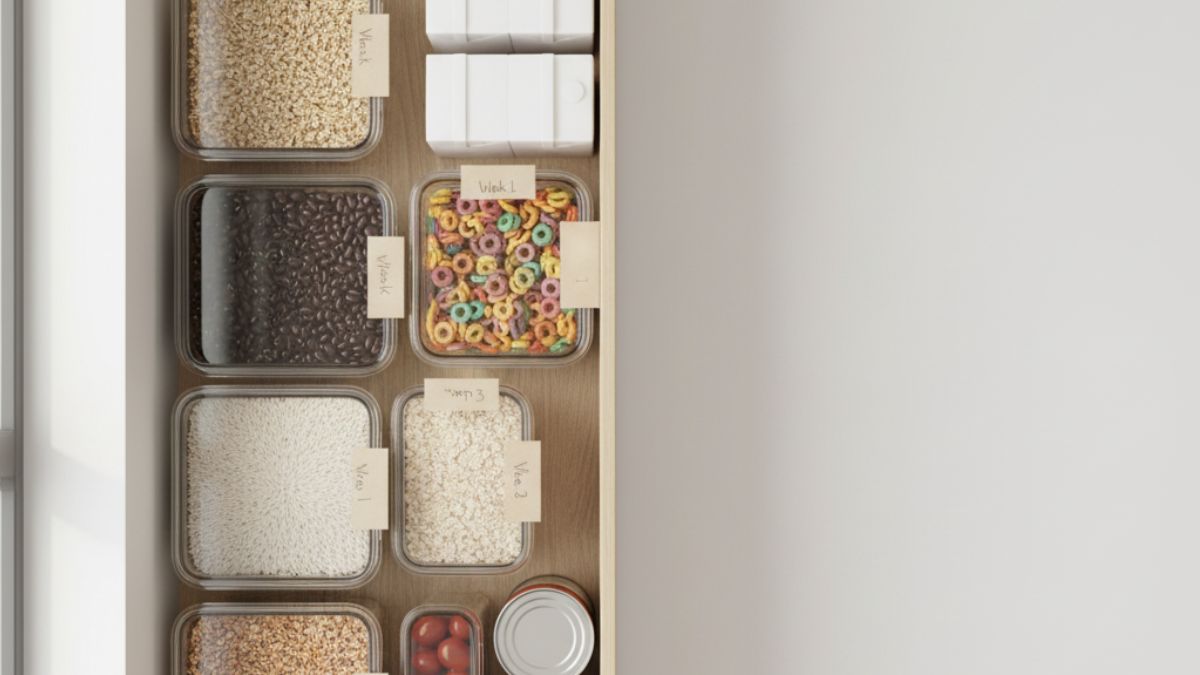
- Group by category. Put cans together. Keep baking supplies in one zone. Store household goods away from food.
- Label everything. Use masking tape and a marker on freezer bags with item and date.
- First in, first out. Move older items to the front when you restock.
| Zone | What lives here | Quick rule |
|---|---|---|
| Grains and carbs | Rice, pasta, oats, tortillas | Clear bins. Keep scoops inside. |
| Proteins | Beans, nut butters, canned fish | Stack by earliest best by date. |
| Meal builders | Sauces, tomatoes, broth, spices | Keep a running list on the door. |
| Breakfast and snacks | Cereal, crackers, popcorn | Pre-portion in small containers. |
Step 6: Make the freezer your budget ally
- Portion proteins before freezing so dinner is grab and cook.
- Freeze soups, sauces, and casseroles flat for faster thawing and easy stacking.
- Keep a small Use First bin to beat freezer burn.
A stocked freezer is what helps you skip takeout when you are tired. That single choice protects the whole month’s plan.
Step 7: Review, refine, repeat
At month end, take five minutes.
- What ran out early. Increase that item next month.
- What sat untouched. Reduce or remove it.
- What you saved. Compare to a weekly shopping month.
Printable monthly stock-up checklist
- Check pantry, fridge, and freezer. List true needs first.
- Set budget split. Core stock-up, fresh add-ins, buffer.
- Clip digital coupons and note sale items for staples.
- Plan one main shop. Schedule it on your calendar.
- Label and store. Rotate old to front. Create a Use First bin.
- Log leftovers and wins. Adjust next month.
Four-week rhythm you can follow
| Week | Main focus | Quick actions |
|---|---|---|
| Week 1 | Main stock-up trip | Buy staples in bulk. Portion proteins. Label and freeze. |
| Week 2 | Fresh add-ins only | Milk, eggs, produce. No extras. |
| Week 3 | Freezer drawdown | Use frozen veg and sauces. Skip takeout once. |
| Week 4 | Pantry creativity | Beans, pasta, rice bowls. Note what ran low. |