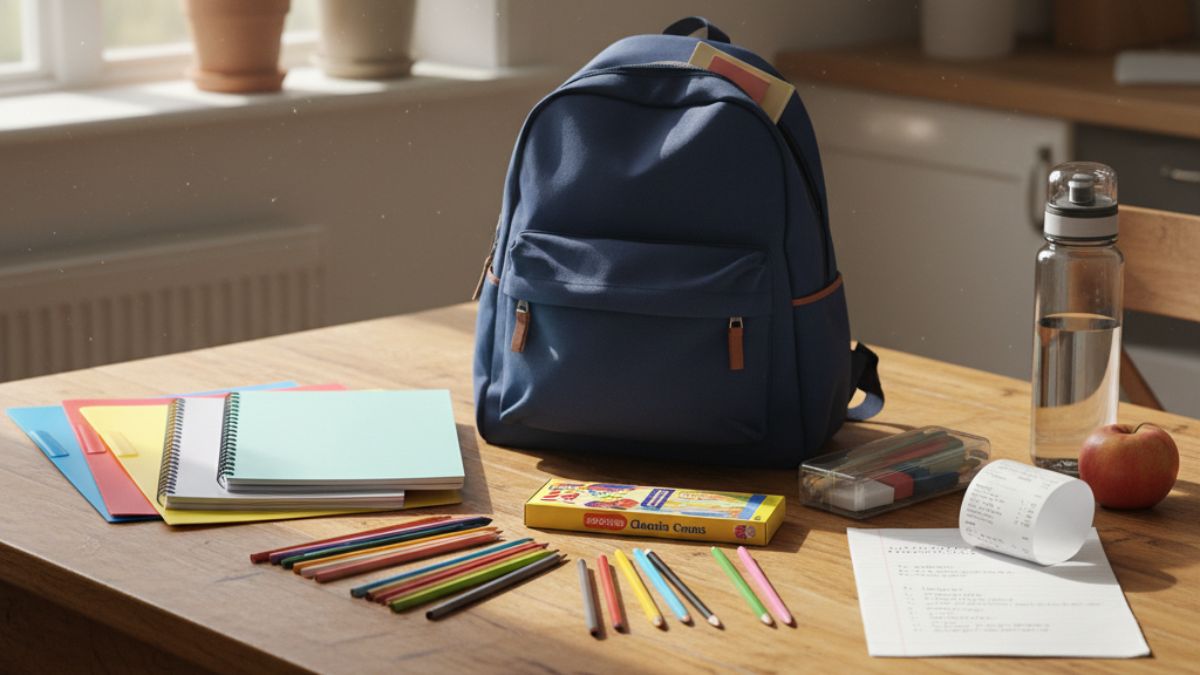
TLDR: Back to School on a Single Parent Budget
- Start with a home audit: inventory supplies, clothes, and tech before you buy anything new.
- Make a must-have list: separate needs from wants and set a total spend limit first.
- Shop in phases: buy essentials now, non-essentials after first-week teacher guidance and sales.
- Use community help: school supply drives, buy nothing groups, and donor programs reduce costs.
- Stretch lunches and snacks: batch prep, bulk buys, and reusable containers keep costs low.
- Cut tech costs: education discounts, refurbished devices, and free software options help a lot.
- Lean on trusted resources: CFPB, FTC Consumer Advice, USA.gov Benefits, DonorsChoose.
Bottom line: a simple plan and phased purchases protect your budget while covering what your child truly needs.
Build Your Back-to-School Plan in Three Steps
Step 1: Audit What You Already Have
Start at home. Empty last year’s backpack and drawers. Gather pens, pencils, notebooks, chargers, lunchboxes, and outerwear. Many families discover they already own half the list. Clean and label what you will reuse. Create three piles. Keep, donate, and recycle. This saves money and reduces clutter before the school year even begins.
Step 2: Create a Needs-First List
Use the school list as your base. Mark absolute essentials in one color and nice-to-haves in another. Add sizes for shoes, jeans, and uniforms. Set a total budget number before you shop. If your school posts grade-level lists, print or save them to your phone so you can check items off on the go.
Step 3: Shop in Two Phases
Phase one covers essentials for week one. Notebooks, pencils, basic folders, a backpack, and any required forms or fees. Phase two happens after the first week once teachers clarify what is truly needed. This approach protects your budget and prevents overbuying items that will sit unused.
Where to Find Free or Low-Cost Supplies
Local Drives and Community Groups
- School and district drives. Ask your school office about supply assistance or backpack programs.
- Community centers, libraries, and faith groups often host annual drives with free supplies.
- Buy nothing and neighborhood groups. Search Facebook or community forums for local swaps.
Donor and Nonprofit Options
- DonorsChoose. Teachers post classroom needs. Families can sometimes receive project materials that benefit their class.
- Boys & Girls Clubs of America. Many clubs run seasonal school supply events and after-school programs.
- USA.gov Benefits. A directory for assistance programs. Use the site to locate help for food, internet, and housing to free up room in your school budget.
Clothing on a One-Income Budget
Build a Mini Capsule Wardrobe
Choose neutral basics that mix and match. Example for one child. Three solid tees, two long sleeves, two pairs of jeans, one pair of joggers, a hoodie, and a pair of school-appropriate shoes. Add a 7-pack of socks and underwear. This covers school days with simple rotations that do not require constant laundry or new purchases.
Smart Sizing and Timing
- Check growth spurts before buying shoes or pants. Leave a little toe room to avoid a mid-semester replacement.
- Thrift and consignment stores are ideal for kids who size up quickly. Search for uniform pieces in near-new condition.
- Buy seasonal gear off-season. Winter coats are least expensive in late winter. Gym clothes go on clearance in spring.
Tech and Internet Without Overspending
Refurbished and Education Discounts
- Consider a refurbished laptop from reputable sellers. Look for a one-year warranty and the option to return.
- Check manufacturer education stores for discounts. Major brands and retailers often offer student pricing in late summer.
- Ask your school about device loan programs. Many districts provide Chromebooks or tablets for classroom work.
Free and Low-Cost Software
- Google Workspace for Education. Many schools provide free access to Docs, Sheets, and Slides.
- Free office suites. LibreOffice is a no-cost alternative for word processing and spreadsheets.
- Learning platforms. Ask teachers which apps are school licensed before you pay for extras.
Affordable Internet
Several providers offer discounted internet for qualifying families. Start your search with your school office or district website. You can also review options through FCC resources and community programs listed on USA.gov Benefits.
Lunches and Snacks That Fit a Tight Budget
Batch Prep and Reusable Gear
- Make a weekly plan. Pick two main lunch options, two sides, and two snacks. Rotate to keep it simple.
- Use reusable containers and a quality water bottle. This reduces waste and repeated snack purchases.
- Prep proteins on Sunday. Roast chicken thighs, boil eggs, or cook beans and freeze portions.
Low-Cost Lunch Formula
One main, one fruit or veg, one snack, and water. Examples. Bean and cheese quesadilla, carrot sticks, pretzels. Pasta salad with mixed veggies and vinaigrette, apple slices, yogurt. Tuna salad on whole wheat, cucumbers, popcorn. Aim for under two dollars per lunch by buying staples in bulk and using leftovers.
Check Eligibility for Meal Programs
Many families qualify for free or reduced price school meals. Ask your school office about application steps. If your child receives meals at school, this can significantly lower your weekly grocery costs and reduce morning prep time. For nutrition guidance and portion ideas, see MyPlate.
Transportation, Fees, and Activities
Plan the Commute
- Check bus routes, carpool options, and bike paths. Combine errands with school drop off or pickup to save gas.
- Keep a shared calendar with pickup times and after-school schedules to avoid last minute ride costs.
Manage Fees Strategically
- List all known fees. Registration, field trips, sports, arts, and club dues. Add due dates and payment methods.
- Ask about fee waivers or scholarships. Schools often have funds for families who request support.
- Pay high-impact fees first. Prioritize items tied to core academics and required activities.
Choose Activities Based on Season and Cost
One activity per kid per season is a smart limit for both time and money. Prioritize programs hosted by the school, community centers, or parks and recreation departments. These are usually lower cost and easier to schedule.
Protect Your Budget With Simple Consumer Tips
Compare Unit Prices and Avoid Impulse Buys
School aisles are designed for convenience. Stick to your list, compare unit prices, and buy store brands when quality is equal. Keep non-essentials for phase two after the first week. For smart shopping and avoiding scams, see FTC Consumer Advice.
Use a Weekly Money Check-in
Set a calendar reminder for a 15 minute review. Check your bank app, update your spending sheet, and confirm upcoming fees. A weekly check-in prevents surprises and keeps spending aligned with your goal. For budgeting basics and free tools, visit the Consumer Financial Protection Bureau.
Your Back-to-School Checklist
- Download the official school supplies list and highlight essentials.
- Home audit. Supplies, clothing, shoes, outerwear, backpacks, lunch gear.
- Set a total budget. Assign a dollar cap for phase one and phase two.
- Plan lunches. Choose two mains, two sides, two snacks for the first two weeks.
- Confirm transportation and after-school care. Add times to your calendar.
- Identify support. Local drives, community groups, scholarship or fee waivers.
- Pick one budgeting habit. Weekly check-in on the same day and time.
Trusted Resources
- Consumer Financial Protection Bureau. Budgeting tools and guidance for families.
- FTC Consumer Advice. Smart shopping, avoiding scams, and return policies.
- USA.gov Benefits. Assistance directory for eligible families.
- National PTA Family Resources. School involvement and family support ideas.
- DonorsChoose. Classroom projects that can support your child’s school.
- MyPlate. Nutrition guidelines and balanced lunch ideas.
Back-to-school does not need to upend your budget. Start with a home audit, buy essentials first, and plan purchases in phases. Use community resources, discounts, and a simple weekly money check-in to stay on track. With a clear plan and a few reliable habits, you can give your child a strong start while protecting your one-income household.