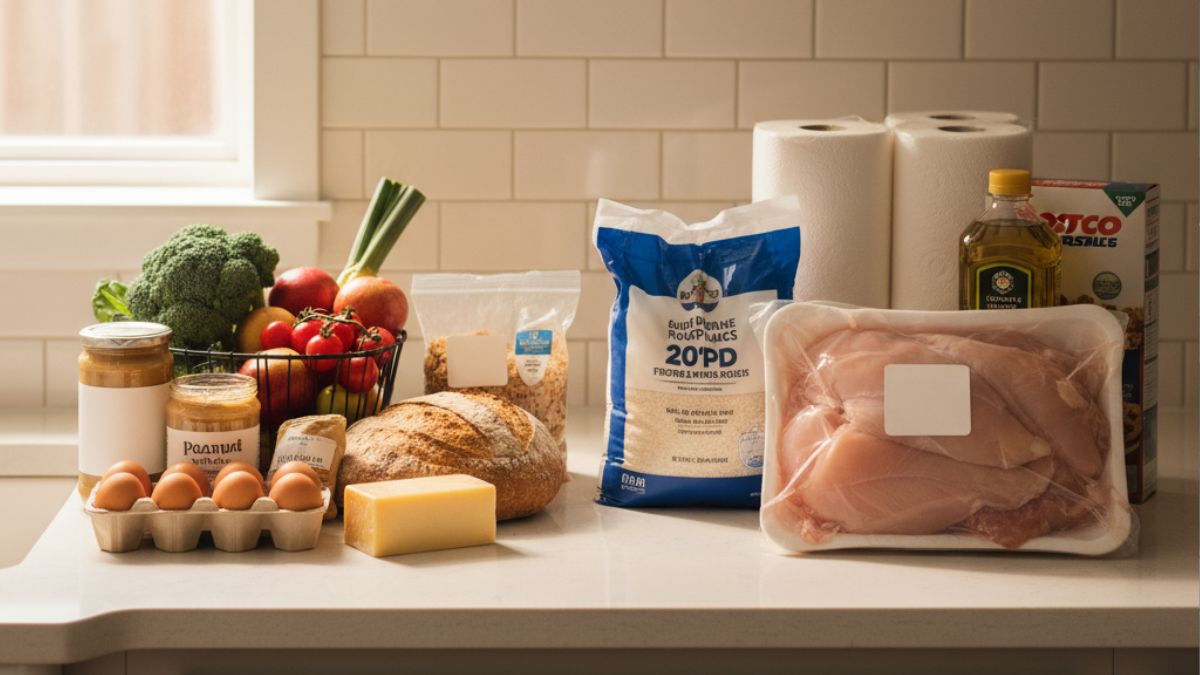
Aldi vs. Costco: Which Saves More for Families of Four or More?
When you’re feeding a family of four or more, every dollar counts. Prices for groceries, snacks, and school lunches seem to rise faster than paychecks, and keeping the pantry full can feel like a full-time job. Two stores often come up in the same conversation — Aldi and Costco. Both promise big savings, but they do it in very different ways. The question is, which one truly saves more for families on a budget?
This guide breaks down the real costs, value, and convenience behind Aldi and Costco. Whether you’re planning $100 weeks or stocking up for the month, we’ll help you decide which store delivers the most food, quality, and sanity for your grocery dollar.
TL;DR: Aldi vs. Costco
- Best for Weekly Budgets: Aldi — lower upfront costs, no membership fee, and consistent savings on essentials.
- Best for Long-Term Value: Costco — bigger packaging and quality store brands pay off if you can buy and store in bulk.
- Winner for Small Families: Aldi — lean selection, quick trips, and smaller portions minimize waste.
- Winner for Large Families: Costco — bulk proteins, household supplies, and long shelf life items provide deeper savings per serving.

Why Families Compare Aldi and Costco
Both stores are built around value, but they serve different types of shoppers. Consumer Reports regularly ranks both Aldi and Costco among the best for affordability. Still, saving money depends on how your family shops. Aldi is perfect for weekly top-ups and fast, focused trips. Costco shines when you can plan meals around bulk buys and manage storage space.
Families often weigh these two because they share the same goal: cutting grocery bills without cutting quality. Yet, each store’s model — Aldi’s efficiency versus Costco’s scale — changes how that savings shows up on the receipt.
How Aldi Keeps Prices Low
Aldi operates with extreme efficiency. It carries fewer products, relies heavily on store brands, and expects customers to bag their own groceries. This streamlined model reduces labor and overhead, letting Aldi sell milk, bread, and produce at prices often 20 to 40 percent lower than big box competitors.
- Selection: Roughly 1,400 items, compared to a traditional supermarket’s 30,000.
- Store brands: 90% of inventory is private label, keeping prices stable when national brands fluctuate.
- Time savings: Smaller footprint means you can complete a full shop in under 20 minutes.
- Checkout model: Cart deposit system and bring-your-own-bag policy reduce operating costs.
According to NerdWallet, Aldi’s value advantage is strongest in fresh produce, canned goods, dairy, and baking staples — categories families buy most often.
How Costco Delivers Value
Costco’s model depends on scale and membership. You pay an annual fee (currently $60) for access to bulk products at wholesale pricing. Its store brand, Kirkland Signature, consistently ranks among the top for quality and price-per-ounce value. Costco’s approach rewards long-term planning, meal prep, and storage efficiency.
- Selection: About 4,000 carefully chosen bulk products focused on value.
- Membership: Annual fee often recouped within the first few trips for families of four or more.
- Product quality: High marks for meats, pantry staples, frozen produce, and household items.
- Extras: Fuel discounts, optical and pharmacy savings, and tire services extend household value.
When managed well, Costco’s bulk packaging can cut grocery costs by 15–25 percent per serving. The challenge is keeping food from going to waste — something smaller families must plan for carefully.
Price Comparison: Aldi vs. Costco
To compare value, we looked at a standard grocery list for a family of four, focusing on fresh produce, meat, pantry staples, and household goods. Prices are averages based on U.S. regional data from ConsumerFinance.gov grocery cost index and store listings as of 2025.
| Category | Aldi (per unit) | Costco (per unit) | Best Value |
|---|---|---|---|
| Milk (1 gallon) | $2.69 | $3.49 (2-pack avg $1.74 each) | Costco |
| Bread (loaf) | $1.29 | $5.99 for 4-pack ($1.50 each) | Aldi |
| Chicken breasts (lb) | $2.79 | $2.49 (bulk) | Costco |
| Eggs (dozen) | $1.75 | $4.50 for 2 dozen ($2.25 each) | Aldi |
| Rice (10 lb) | $8.99 | $12.99 for 25 lb ($0.52 per lb) | Costco |
| Apples (3 lb bag) | $3.49 | $7.99 for 5 lb ($1.60 per lb) | Aldi |
| Toilet paper (12 rolls) | $6.49 | $19.99 for 30 rolls ($0.67 per roll) | Costco |
Result: Aldi wins on smaller, weekly purchases. Costco pulls ahead in bulk categories like meat, rice, and paper goods. For a typical family, Aldi saves more on the day-to-day, while Costco shines for long-term planners.
Hidden Costs to Watch
- Storage and waste: Bulk buying at Costco requires freezer and pantry space. Spoiled food erases savings fast.
- Membership fee: Factor in $60–$120 yearly before calling Costco cheaper.
- Time investment: Aldi’s smaller layout saves time; Costco trips can take hours.
- Location access: Some areas have Aldi nearby but require long drives to reach Costco.
Quality Comparison
Both stores maintain excellent store-brand reputations. Aldi’s Simply Nature and Specially Selected lines compete directly with national brands for taste and freshness. Costco’s Kirkland Signature products frequently rank at the top of Consumer Reports grocery quality lists.
In taste tests and family meal planning, Aldi wins for everyday affordability and freshness. Costco wins for consistency and premium quality per dollar when buying in volume.
Which Store Fits Your Family Best?
- Choose Aldi if: You shop weekly, prefer small trips, and want to spend under $150 per week without worrying about memberships or storage.
- Choose Costco if: You can plan monthly, store bulk items, and manage a consistent meal prep routine that prevents waste.
- Mix both if: You have an Aldi nearby and a Costco membership — buy staples at Costco, fresh items weekly at Aldi.
How to Save Even More at Both Stores
- Compare unit pricing: Always check per-ounce or per-pound cost. Bulk isn’t always cheaper.
- Use cashback apps: Fetch Rewards, Rakuten, and Ibotta work at both stores and can return hundreds annually.
- Shop store brands first: Aldi’s and Costco’s private labels offer consistent quality at lower cost.
- Plan meals before shopping: Check your freezer and pantry first to avoid duplicate spending.
For more grocery strategies, visit How to Feed a Family of 3 on $100 a Week and 10 Grocery Hacks Single Moms Swear By for practical tips on stretching every meal dollar.

Frequently Asked Questions
Is Aldi cheaper than Costco?
Yes, for small weekly trips and families without extra storage. Aldi’s smaller portions and no membership cost make it easier to stay on budget week to week.
Is Costco worth it for families of four?
Usually yes. If you cook at home, pack lunches, and can store bulk items properly, Costco’s savings on meat, produce, and household supplies outweigh the membership fee.
Can I combine both stores for maximum savings?
Absolutely. Many families buy dry goods and cleaning supplies at Costco while shopping Aldi weekly for produce and dairy. This hybrid approach gives you the best of both worlds.
Which has better quality?
Both maintain strong store-brand reputations. Aldi wins for affordability and freshness, while Costco’s Kirkland Signature line stands out for premium bulk value.
Final Thoughts
For families of four or more, the real winner depends on how you shop. Aldi makes everyday grocery trips affordable and efficient. Costco rewards planning, preparation, and freezer space. If your goal is to stretch dollars without sacrificing quality, the answer may not be either/or — it’s knowing when to use each one strategically.
Related reading: Best Grocery Stores for Feeding a Family on a Budget and Best Discount Stores for Budget Shoppers to find more ways to keep your grocery bill low.
External references:
Consumer Reports grocery rankings |
NerdWallet grocery inflation guide |
ConsumerFinance.gov grocery budgeting tips